Halesi Mahadev Darshan
Duration: 1 Nights 2 Days Trip (Minimum Time)Destinations: Khotang Dist / 217 Kms Approx.
Tour Type: Religious, Cultural & Pilgrims Tour
Ideal For: Hindu & Buddhist Temple, Pilgrims, History & Culture Enthusiasts, Peace Seekers etc
Halesi Mahadev, is a sacred temple for both Hindu and Buddhist. It is believed that inside the temple, the Halesi cave has been used as a dwelling for 6000 yrs. Lord Shiva hide there when hiding from the demon Bhasmasur. The location of the cave is between the holy rivers of Dudh Kosi and Sun Kosi River.During Bhasmasure, Ram Nawami and Ganesh Chaturthi fairs and festivals are held in this region. Hindu people Vikram Sharma of India started going here after climbing many hills. It becomes famous in 2011 This place climate is cold and rainy. Now-a-days, people can come here with by Jeep.Cave:
This cave is 67 feet below the surface of the land and is both a revered religious place and a favourite tourist destination. It entrance is shaped a half moon and faces towards the east. It has a round shaped with a distance of 193 ft with separate cave lying beneath. The floor is 223ft circumference.

Key Details:
Location District: Halesi Mahadev Cave is situated in the Khotang District, about 185 kilometers southwest of Mount Everest, and roughly 222 kilometers east of Kathmandu.Accessibility: The cave can be reached by road from Kathmandu, taking about 8 to 10 hours by vehicle. Alternatively, visitors can take a flight from Kathmandu to the nearby airport at Lamidanda, followed by a short drive.
Religious Significance:
Hindu Beliefs: For Hindus, the cave is considered a sacred abode of Lord Shiva. It is believed that Lord Shiva hid in this cave to escape from the demon Bhasmasur. The cave has a Shiva Linga, which is the central object of worship.Buddhist Beliefs: For Buddhists, the cave is known as Maratika Cave, where Guru Padmasambhava and Dakini Mandarava attained the realization of immortality. It is one of the most important pilgrimage sites for Vajrayana Buddhists.
Tri-Cave Complex: The cave complex has three main caves, which are symbolic of the three major deities in Hinduism: Brahma, Vishnu, and Shiva.
Cave Architecture and Features:
Cave Entrance: The entrance to the cave is narrow and requires visitors to descend several steps. The interior of the cave is expansive and consists of various natural rock formations and chambers.Shiva Linga: The main chamber houses a natural Shiva Linga, which is the focal point of worship. The linga is bathed in water from a natural spring inside the cave.
Holy Ponds and Footprints: Inside the cave, there are small ponds and imprints believed to be the footprints of deities. The water in these ponds is considered holy and is believed to have healing properties.
Festivals and Rituals:
Shivaratri: Maha Shivaratri is the most important festival celebrated at Halesi Mahadev Cave. Thousands of devotees visit the cave to offer prayers and perform rituals during this time.Bala Chaturdashi: Another significant festival is Bala Chaturdashi, during which pilgrims offer grains and light lamps in memory of deceased ancestors.
Lhosar: For the Buddhist community, Lhosar (Tibetan New Year) is an important festival celebrated at Maratika Cave.
Pilgrimage and Spiritual Importance:
Pilgrimage Site: Halesi Mahadev is one of the most important pilgrimage sites in Nepal for both Hindus and Buddhists. It is often compared to the Pashupatinath Temple in terms of spiritual significance.Spiritual Practices: The cave is a place for meditation, prayer, and seeking blessings. Many pilgrims believe that visiting the cave and offering prayers can bring them closer to the divine and fulfill their wishes.
Cultural Importance:
Religious Harmony: The site is a symbol of religious harmony, where both Hindu and Buddhist traditions are respected and practiced.Local Culture: The area around Halesi Mahadev is rich in local culture and traditions, with various ethnic groups such as the Rai and Sherpa communities living nearby.
Environment and Scenery:
The cave is surrounded by beautiful natural scenery, including hills, forests, and rivers. The tranquil environment adds to the spiritual experience of visiting the site.Visiting Information:
Best Time to Visit: The best time to visit Halesi Mahadev Cave is during the festivals of Shivaratri and Bala Chaturdashi. The months of September to November and March to May are also ideal due to favorable weather conditions.How to Get There: Visitors can reach Halesi by taking a bus or jeep from Kathmandu. Flights are also available to Lamidanda Airport, followed by a short drive to the site.
Important Tips:
Respect Local Customs: Visitors should dress modestly and respect the religious practices and local customs.Prepare for the Cave: The cave can be dark and slippery, so it is advisable to carry a flashlight and wear appropriate footwear.
Stay Arrangements: Basic accommodations are available near the cave. It is advisable to book in advance, especially during festival times. Tour Plan
Day 01: Kathmandu to Khotang Halesi Temple
Day 02: Halesi Mahadev Puja and Darshan - Back to Kathmandu Special Package Offer - Holesung Resort Pvt. Ltd (Halesi)
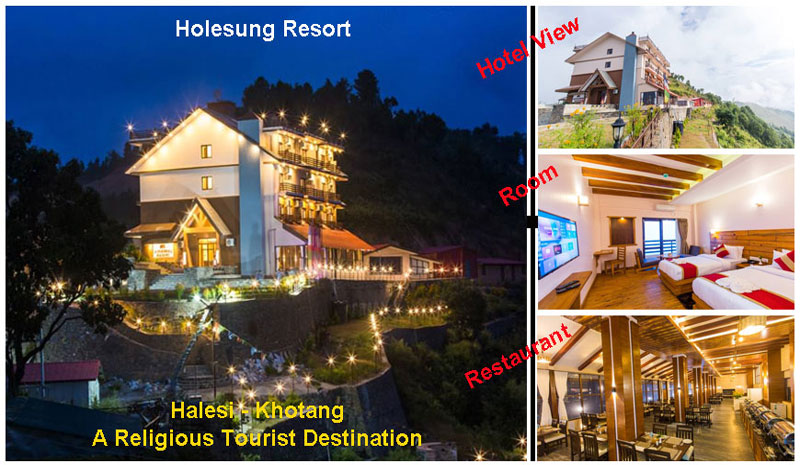
Being an Eco-friendly resort, Holesung is an environmentally conscious hotel that has heralded a new standard of environmental responsibility in the hospitality industry.
The hotel has cool, open spaces that are perfectly complemented by its warm and intimate hospitality. It comprises of 28 tastefully decorated rooms and suites, banquet halls, which can accommodate anywhere from 300 to 350 people. Its Holesung Restro bar offers a breathtaking view of the hilly area.
All rooms are equipped with modern amenities including LCD TV with 24hr cable access, 24hr hot water, A/C, Lift, Wi-Fi, and data port connectivity.
Visit Details: https://holesungresort.com/ Package Includes:
• Welcome drinks upon arrival
• Accommodation in Holesung Deluxe Room
• Breakfast
• Free WIFI for individual guest
• Complimentary 2 bottles of mineral water in the room
• Tea/Coffee Maker in the room Room Rate FOR NEPALI CITIZEN:
SINGLE Rs 5000 & DOUBLE Rs 6000 | EXTRA BED Rs 1500
Room Rate FOR INDIAN CITIZEN:
SINGLE IRs 3500 & DOUBLE IRs 4500 | EXTRA BED IRs 1200
Room Rate FOR FOREIGN CITIZEN:
SINGLE US$ 55 & DOUBLE US$ 70 | EXTRA BED US$ 20
TRANSPORTATION: - Tour Cost
BY JEEP (Scorpio) - RESERVED BASIS: RS 28,000/- (Max 7 Pax)
 Spiritual & Religious Pilgrim's Package Tour
14 Days Pilgrims Tour Nepal
11 Days Pilgrims Tour Recommended Pilgrimage Tour in Nepal:
1. Buddhist Spiritual Pilgrimage Tour Nepal - Buddhist Pilgrimage Tour
2. Hindu Piilgrimage Tour Nepal - Hindu Pilgrimage Tour
WhatsApp Live Chat:
BOOK NOW: Online Booking Form.
Support Call: +977 9816 770504 | WhatsApp or Viber
Holy Sites